Table of Contents
- 1. Get to know your ideal reader to improve your decision-making
- 2. Master your positioning to uncover your perfect niche
- 3. Fine-tune your offer to appeal to your ideal reader
- 4. Create an author website to be your digital hub
- 5. Gather reviews to strengthen your case with potential readers
- 6. Reach out to bloggers and content creators to create a buzz
- 7. Build a mailing list to nurture a loyal community
- 8. Build your brand on socials to reach a wider readership and form connections
- 9. Use event appearances to interact directly with readers and grow your brand
- 10. Be strategic with paid advertising to get in front of the right readers
- Speed up the process with Marketability Analysis
- The most important thing to remember about marketing a book
You’ve poured time, energy, and care into your book—now it’s time to get it in front of readers. But with so many possible channels and approaches, working out how to market a book can feel almost as overwhelming as writing it.
To help you come up with an action plan, here are 10 practical, free, or low-cost ways to market your book yourself. While this advice is most relevant for authors who are self-publishing, a lot of it will prove useful if you’re taking the traditional publishing route.
1. Get to know your ideal reader to improve your decision-making
You likely have a rough idea of who might enjoy your book, but to market it successfully, you need to really get to know them.
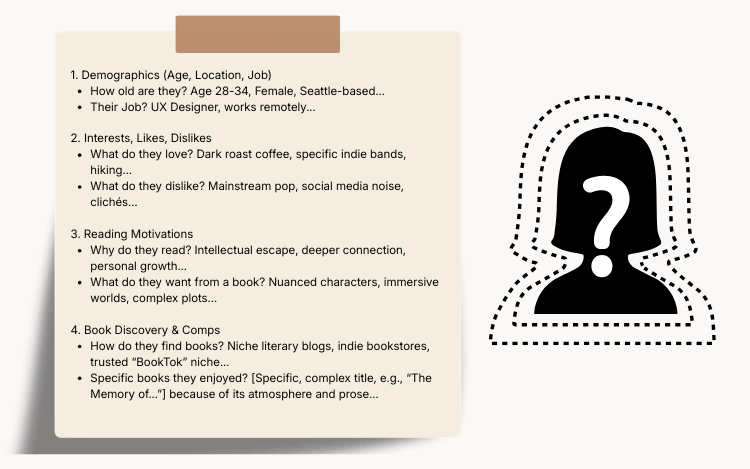
Create a reader avatar—an imaginary person who represents your ideal reader. Ask yourself:
How old are they?
What are their interests, likes, and dislikes?
Why do they read?
What do they want out of the books they read?
How do they discover books?
What specific books did they enjoy and why?
Not all of your readers will overlap perfectly with this profile, of course, but it’s a compass for decision-making. Trying to work out what will appeal to a broad, undefined group can be difficult. Your ideal reader profile humanizes your audience and makes it easier to narrow down your options and come up with messaging that will strike a chord.
2. Master your positioning to uncover your perfect niche
Positioning is all about finding where a book fits in the publishing landscape. If you’re self-publishing, this will guide your promotional decisions. If you’re traditionally publishing, it will help you write a killer query letter.
You likely already know your book’s genre (fantasy, romance, literary fiction, etc.) but does it belong to a subgenre or particular niche? For instance, high fantasy is marketed differently to urban fantasy. Then there are even finer distinctions; for instance, is it political fantasy or a quest narrative?
How will people find it online? Browse the categories on stores like Amazon to identify where your book might fit. There are keywords to consider too. What search terms are people using?
It’s also useful to have some strong comps (short for comparative titles)—books that are like yours and that your ideal readers are likely to love. Ideally, these should be recent, though you can use older titles, provided you balance them out. You could also draw from other media like TV.
Comps help you with your research (you can see how those books were marketed) but they’re also an invaluable shorthand when you’re appealing to potential readers—you’ve almost certainly seen something like “perfect for fans of X, Y, and Z” in a book description recently.
3. Fine-tune your offer to appeal to your ideal reader
The way you present your book needs to appeal to your ideal reader and fit the niche you’ve identified.
Spend time perfecting your book descriptions. You’ll probably want a short description or elevator pitch that will grab readers’ attention, as well as a compelling deeper dive for your back cover and/or product pages. You may need to tweak these slightly for different platforms.
Your front cover is also a marketing tool. It should look good, but that isn’t the only criterion, as the imagery, colors, and fonts all give readers an impression of what they’ll find inside.
Research what other authors in your space are doing as that will give you an insight into readers’ expectations and tastes. While standing out is great, readers also need to know that your book is going to deliver on what they’re looking for. A cover or description that’s too inconsistent with the conventions of the subgenre might put someone off. You also need to make sure how you present your book matches the content, so people don’t feel misled.
4. Create an author website to be your digital hub
Having an author website gives you a hub to gather all your different channels together and also helps build your credibility.
You’ll probably want to include a quick bio, the sign-up form for your mailing list, your various social profiles, and those all-important purchase links. You could also use it to share news or to host a blog.
5. Gather reviews to strengthen your case with potential readers
Reviews are gold dust for enticing readers.
You can get ahead by recruiting ARC readers who receive copies of your book (ARCs—advance reader copies) before launch. They can give you the honest reviews you need to attract more people.
You can find ARC readers on social media through writing communities or via dedicated ARC reader spaces on sites like Reddit.
There are also designated platforms, like NetGalley, BookSirens, and Goodreads’ giveaway feature, though these often involve a fee.
6. Reach out to bloggers and content creators to create a buzz
Being featured by an established book blogger or content creator can give your book a boost.
You can reach out to them yourself, offering them a free ARC of your book. Just make sure you pick ones who have shown interest in books like yours and send a polite, personalized pitch.
Then, there are blog tours—campaigns where your book appears on a series of blogs to build momentum.
There are people out there who can arrange a tour for you, though it will almost certainly involve a fee. Alternatively, you can DIY a tour, though it’s likely to take a lot of project management.
7. Build a mailing list to nurture a loyal community
Building a mailing list can take time, but it’s well worth the effort as it gives you a way of keeping in touch with fans that isn’t at the mercy of social media algorithms.
Creating a list isn’t as scary as it might sound: there are many platforms out there that will help you manage it and create visually appealing emails.
Lead magnets, pieces of quality free content people receive upon signing up, are useful for attracting subscribers. Short stories, guides, or artwork related to your book are good places to start.
Rather than just sending out the occasional sales email, think about how you can provide value to your subscribers and build rapport with them. You could share extracts, updates about your writing, or recommendations.
Share how to sign up on your website, socials, and in the back of your books.
8. Build your brand on socials to reach a wider readership and form connections
Social media can be a hugely powerful marketing tool.
Think about your ideal readers and go where they are. What platforms, communities, and hashtags are they likely to be checking?
You want to focus on providing more than just a straightforward sales pitch. Ask questions inspired by your book. Share intriguing short videos or graphics. Build excitement with a cover reveal.
Your content should also branch out beyond your own book, though. Tell people what you’re reading. Pass on interesting nuggets of information you come across. Respond to other people’s posts. It all helps you to become more visible and build connections.
9. Use event appearances to interact directly with readers and grow your brand
Events can get you in front of readers who might not have discovered you otherwise.
Speak to bookshops, libraries, and book clubs to see if they’d be interested in partnering on an event. Look into literary festivals and book fairs. There are also virtual events which could help you spread your reach beyond your local area.
10. Be strategic with paid advertising to get in front of the right readers
Paid advertising can be effective, but you need to be careful.
Ad costs can quickly mount up, so set a budget from the outset and make sure you’re on top of what you’re spending. Platforms may also occasionally offer free credit, so it’s worth keeping an eye out for offers.
Pick your platforms with care. Amazon and Meta Ads are popular options, but you may also want to think about book promotion platforms and other authors’ newsletters. Vet any platform thoroughly and make sure it’s not only reputable but relevant to your readership.
Platforms let you target your ads to a particular type of person. Use your ideal reader profile to help.
Pay attention to your analytics. Decide how you’re going to measure success and constantly gauge how that stacks up against the cost.
For more advice, check out this useful guide from the Alliance of Independent Authors.
Speed up the process with Marketability Analysis
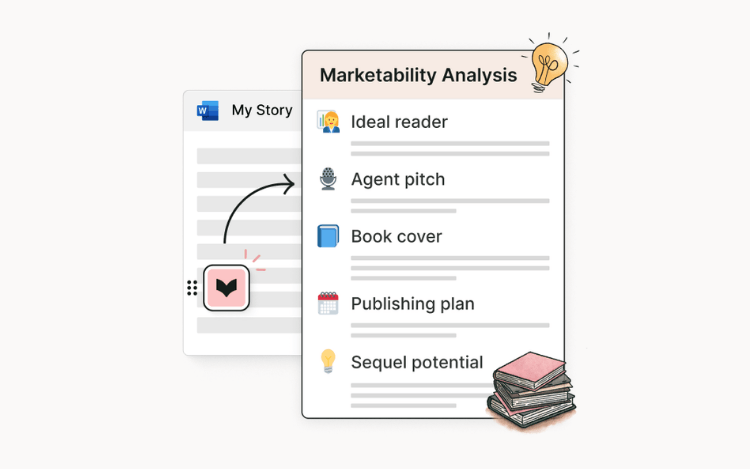
If the question of how to market your novel is still feeling a little overwhelming, ProWritingAid’s Marketability Analysis can help. It’s an affordable tool that saves time and effort by providing an actionable strategy specifically tailored to your book and based on in-depth analysis of the market.
Sidestep the guesswork with bespoke strategies and ready-to-use resources based on your full manuscript. The tool takes the mystery out of pinpointing your ideal reader and identifying your niche in the market, then helps you to choose a title, description, and cover design that will attract attention while taking full advantage of trends. Each suggestion is explained in depth and relates directly to your book, so you can understand the underlying strategy and why it works.
When you’re ready, the launch plan helps you set yourself up for success before and after publication day. It features pitch templates, lead magnet suggestions, concepts for social posts, and more.
Ready to discover what Marketability Analysis can do? Head over here to find out more.
The most important thing to remember about marketing a book
The most important thing to remember is that marketing a book is an ongoing process: it involves picking a range of different methods, measuring what works, and constantly making tweaks. It will take creativity and persistence, but as a writer, those are two things you have in abundance. However you choose to market your book, good luck.

Discover Marketability Analysis
Get the tools you need to confidently position your book for agents or self-publishing
